Nidhi Bhanshali Pandya's
The Ayurvedic Nutrition Certification Program
Authentic Ancient Framework · Modern Context · Taught From The Sanskrit Sources, In Full · Applied To The Body You're Living In And The Food You Actually Eat · For Your Own Life · For The People You Feed · For The Practice You're Building
October 2026 - August 2027 · Classical Sanskrit Texts Decoded · Modern Nutrition Science · Mentored Practicum · Original Research · NAMA PACE-Listed
For Practitioners and Personal Use.
Sanskrit source study, modern nutrition science, mentored client work and original research, in one program.
Next cohort begins Wednesday, October 28, 2026.
Two paths available - study for yourself, or train to practice.
A Practitioner-Level Training, Recognized for NAMA PACE Continuing Education
Here is what that actually means:
This program is listed with NAMA (The National Ayurvedic Medical Association) at 28 PACE credits under Topics in Ayurveda - approved at all three professional levels: Ayurvedic Health Counsellor, Ayurvedic Practitioner, and Advanced Ayurvedic Practitioner.
Three things follow from that:
- A national professional body reviewed this training and listed it. Not a platform. Not an algorithm. Not a badge we designed for ourselves.
- If you are already NAMA-certified, this covers all 28 course credits in your two-year cycle. The other 2 of your 30 come from NAMA's ethics quiz. Your continuing education, in one program.
- The material is pitched at practitioner level - approved all the way up to Advanced Ayurvedic Practitioner.
And here's the part that matters if you're not a practitioner and never intend to be:
You will be taught at that level too:
Nothing is simplified because you're not planning to take clients. You'll read the same verses, learn the same framework, and be held to the same standard of thinking. The depth is the point – for all of us.
You've Read More About Food Than Most People
Ever Will, And It Still Doesn't Add Up
Maybe some of this sounds familiar:
- You know which foods are "for Vata," and you still can't say why the same bowl of oats settles you one week and sits heavy the next.
- The advice turns over every few years. More protein, then more plants, then fasting, then something else.
- A single headline about seed oils or oat milk can unsettle a whole week of cooking.
- You cook a dinner for three people, and each one has a different experience.
- You're feeding different needs out of one kitchen and quietly running more than one menu.
- You tried eating for your dosha and ended up with a list you couldn't actually live inside.
- The food you really eat - sourdough, quinoa, a grain from your grandmother's kitchen - appears on no list you were ever given.
- You've studied some Ayurveda and can feel a floor missing underneath it.
- A client asks what to eat for breakfast, and you give an answer you couldn't fully explain if pressed.
- You're a coach, yoga teacher, therapist or nutritionist, and food keeps coming up in sessions where you'd like to offer more.
- You'd simply like to stop looking things up.
None of that comes from a lack of effort. You were handed lists, and a list can only answer the questions its author thought to ask.
The classical texts were never written as lists. Somewhere between the Sanskrit and the shopping list, the method was left behind.
That method is what this program teaches.
A List Tells You What To Eat.
The Classical Texts Teach You
How To Think About Food
Open Vagbhata's Ashtanga Hridayam and you won't find "foods for Vata." You'll find a way of reading any substance: its qualities, the elements it's made of, its taste, its potency, what it becomes after digestion. And then the person who is about to eat it.
In the first weeks of this program, I'll ask you to stop thinking only in doshas and start thinking in gunas - the qualities a substance carries. Heavy or light. Warm or cool. Oily or dry. Dense or flowing.
Take rice:
A modern nutrition label hands you a glycemic number and, usually, a verdict: eat less of it. The classical texts start somewhere else. Rice is sweet, cooling and moist, and heavier when the grain is freshly harvested.
Once you can see that, rice is no longer good or bad. It's something you can work with. You choose an older grain. You add ghee. You serve it with beans, which are dry and light where rice is moist and dense.
No food is good or bad. Every food can be read. And once you can read it, you can adjust it.
You stop asking whether rice is bad for you. You start asking what it does, who is eating it, and what it needs.
That shift is the whole program. And a method doesn't expire when the next trend arrives.
By The End, You Can Read
Any Food, Read Any Person,
And Bring The Two Together
Any food, including the ones the texts never saw
- Hand yourself something no classical physician ever tasted - oat milk, an aged cheese, something bottled last year - and you'll be able to work out what it does.
- You'll read it by its qualities, its taste, its potency and what it leaves behind once it's digested.
- You'll change it. Soaking, heat, fat, spice, culturing, storage and what it's served alongside all change what a food does in a body. You'll learn which of these to reach for, and why.
- You'll combine it. You'll learn what offsets what, and the reasoning behind the classical list of 18 kinds of incompatible combinations, not just the list itself.
- You'll time it. The same food is a different food at breakfast and at supper, in one season and the next, at twenty-five and at sixty.
- And when the next trend arrives with a claim attached, you won't need to wait for someone else's verdict.
Any person, starting with yourself
- You'll learn to take an intake, and to read digestive fire (agni), undigested residue (ama), history, constitution and the state someone is in right now.
- You'll decide what that picture is asking for: support, cleansing or nourishment.
- Then you'll recommend real food, in their kitchen and their culture, that they'll actually cook on a Tuesday. You'll watch what shifts, and you'll adjust.
- On the Personal Path, the first person you do this for is you, and then everyone you cook for.
- On the Practitioner Path, you do it with five real clients.
You won't need a food list again. You'll know how one is written.
Everyone Learns The Same Thing.
What You Do With It At The End Is Your Choice.
Every student in this cohort reads the same verses, attends the same live lessons and Friday calls, and learns from the same teacher. Nothing is simplified for the Personal Path. The difference is what happens after Part B.
October 28, 2026 To May 12, 2027
👤The Personal Path
For your own life, and the people
you cook for
You want to understand why one meal settles you and another doesn't. You want to cook for a household with different needs without guessing. You want your own footing when the next headline lands.
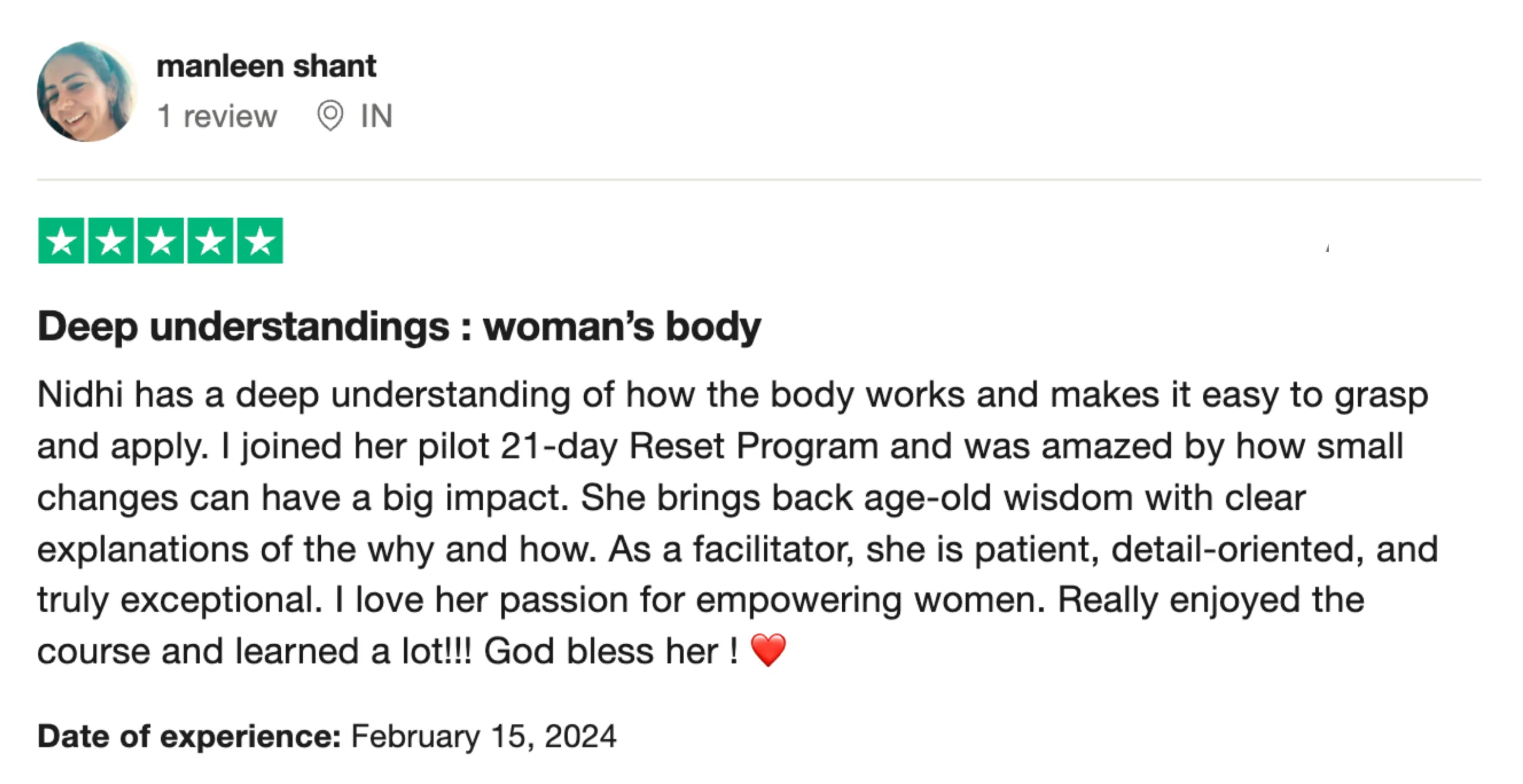
You take every lesson in Parts A and B, the two-week Self-Practice Lab, the Friday calls and the guest lectures. Food for Common Conditions is yours if you'd like it. There's no thesis and no client practicum.
You finish with a certificate of completion.
$3.500
October 28, 2026 To August 2027
Join the Personal Path
👥The Practitioner Path
Everything in the Personal Path, plus the part that turns knowledge into practice.
Food for Common Conditions. An original thesis, researched and presented to your cohort. A client practicum with five real people, from intake to a personal food roadmap. Live Friday office hours until mid-June, then independent work through August, with Nidhi mentoring you through your cases and looking over your work as you go.
You graduate as an Ayurvedic Nutrition and Lifestyle practitioner.
$4.000
With real client work behind you and a professional toolkit in hand
Comparison Table
Personal Path |
Practitioner Path |
|
|---|---|---|
|
Live lessons, Parts A and B |
✓ |
✓ |
|
Friday Q&A calls |
✓ |
✓ |
|
Sanskrit source study, translated live |
✓ |
✓ |
|
Self-Practice Lab |
✓ |
✓ |
|
Guest lecture series |
✓ |
✓ |
|
Session recordings |
✓ |
✓ |
|
Food for Common Conditions |
Optional |
✓ |
|
Thesis and cohort presentation |
– |
✓ |
|
Client practicum, five people |
– |
✓ |
|
Part C office hours with Nidhi |
– |
✓ |
|
Mentoring from Nidhi on your cases |
– |
✓ |
|
You finish with |
Certificate of completion |
Practitioner certification |
|
NAMA PACE credits |
None |
28 |
|
Runs |
October 2026 - May 2027 |
October 2026 - August 2027 |
|
Investment |
$3,500 |
$4,000 |
*Payment plans are available on both paths at checkout.
Not sure which path yet?
Start on the Personal Path. You can move to the Practitioner Path any time before Part B ends on May 12, 2027, for $700.
First The Source Texts, Then Your Own Kitchen,
Then The People You'll Guide
Live online from Wednesday, October 28, 2026:
21 lessons, a revision class, and three reserved weeks held for extra topics or guest lectures, so nothing important gets rushed.
Both Paths:
October 28, 2026 to January 27, 2027
You'll study nutrition as the classical physicians taught it, directly from the Charaka Samhita, the Ashtanga Hridayam and the Bhavaprakash Nighantu, with every verse translated live. It is dense at first. Give it a few weeks, and the gunas start turning up in your own kitchen.
- The doshas as working parts of the body, and how each rises and falls across a lifetime, a day and a single meal
- The ten pairs of opposite qualities, and how to read any substance by its elements, taste, potency and post-digestive effect
- The six tastes, tasted for yourself, and what each one says about what a food will do
- Grains, pulses and vegetables, verse by verse, including where quinoa, oats, amaranth and buckwheat belong
- Water, milk, ghee, oils, jaggery and fermented drinks, and when each one helps
- Your spice rack through classical eyes, and the texts' list of the single best substance for each need
- How you eat: timing, cooking vessels, how soaking, heat and culturing change a food, and the 18 kinds of incompatibility
- Agni, and the journey of one meal all the way through the body
A revision class then brings Part A together into one connected picture before you step into the kitchen.
Both Paths:
February 3 to May 12, 2027
Here the science becomes something you can use without looking it up, for yourself, for the people you love, and for the people you may one day guide.
- How you eat, and how you feel while you're eating, including ways out of the deprivation, binge and guilt cycle
- New this year: Dinacharya, the Ayurvedic day. Waking, meals, sleep and evening wind-down, built into a rhythm that holds up through work, children and travel.
- Real meals: breakfasts graded from light to heavy, lunches from cuisines around the world, and a kitchen set up to nourish
- Modern foods such as plant milks, aged cheeses and quinoa bowls, and a five-part tool for reading anything new
- Carbohydrates, protein, fats, fiber, iron, B12 and calcium, mapped onto the six tastes
- The six classical seasons on a modern calendar, with gentle seasonal cleansing
- Personalization: the intake, the Food-Mood-Poop journal, cravings, and patterns such as restriction and emotional eating
- Lifecycle nutrition, from first foods to menstruation, PCOS, perimenopause and menopause
- Rasayana, Ayurveda's rejuvenatives, with the herbs, formulations and seasonal chutneys that belong alongside them
- Food for Common Conditions (Practitioner Path; optional on the Personal Path): food as support for blood sugar, cholesterol, gut sensitivity, migraines, allergies and colds, and how to work with borderline cases
Practitioner Path:
Late May to August 2027
This is where your learning becomes your own work.
- Your thesis. You choose a topic that interests you. You might study a traditional cuisine through Ayurveda, compare Ayurvedic and Chinese dietary systems, build a complete meal protocol for one condition, or propose your own. You can write a paper as a group, or work solo or in a small group and add a 20-minute video. Every presentation is shared with the cohort, so you graduate with a library of research built by the people you studied beside.
- Your practicum. You guide five real people. You take their intake and read their journals, assess their agni and history, decide whether they need support, cleansing or nourishment, and design an individual food roadmap for each, documenting your reasoning as you go. Most students work with friends and family, or with classmates. If you can't find anyone, Nidhi helps.
Part C opens with live Friday sessions, 11:00 am to 12:30 pm EST. They begin after a one-week break at the end of Part B and end before June 15, 2027. From there through August, you complete your thesis and client work on your own schedule, still as part of the program. Nidhi mentors you throughout, looking over your direction along the way, not only at the end.
Built-in pauses: no class Thanksgiving week (November 25 and 27), a winter break from December 17 to January 5, and no class March 24 and 26. All times are US Eastern. The schedule may be adjusted during the program.
New This Year
The Self-Practice Lab
Before you guide anyone else, you become your own first case. Over two weeks, you'll:
- Keep your own Food-Mood-Poop journal
- Take yourself through the full intake
- Read your own agni, ama and Inner Climate®
- Design your Phase 1 rhythm around a few anchor habits
- Choose your ideal foods for your constitution and the season
- Write a sample day of meals, and edit your pantry to match
Some of the teaching comes from people who grow, make and practice this every day
Guest lectures take place during Part B, and dates are announced during the program. Both paths attend.
Omkar · TWO BROTHERS ORGANIC FARMS
A working farm in India that has brought traditional methods back. Omkar covers native cows and A2 milk, ghee churned the bilona way, glyphosate-free testing, and the revival of heirloom khapli wheat - and what the body loses when food goes industrial.
Dr. Jay · ATHREYA HERBS
A practitioner and formulator who brings the classical texts into the apothecary. Dr. Jay teaches rasayana as its own branch of Ayurveda, longevity in the Charaka Samhita, and the rejuvenatives for each tissue of the body.
To be announced · TRADITIONAL CHINESE MEDICINE
Two ancient dietary systems, developed independently. Where they reach the same conclusions about food and the body, and where they part ways.
More guests to be announced.
Everything You Receive
When You Join
ON BOTH PATHS
- 21 live lessons on Wednesdays, plus a revision class and three reserved weeks for extra topics or guest lectures
- Live Friday Q&A calls through Parts A and B
- Office Hours for Professional Path Support in Part C
- Recordings of every session
- Direct study of the Sanskrit verses, translated live by Nidhi
- The guest lecture series
- The two-week Self-Practice Lab
- The full downloadable curriculum
THE PRACTITIONER PATH ADDS
- Food for Common Conditions
- An original thesis, presented to your cohort
- A client practicum with five people
- Live Friday office hours in Part C, until mid-June
- Mentoring from Nidhi on your client cases
- Certification as an Ayurvedic Nutrition and Lifestyle practitioner
This is real study,
and it asks for real time
Four hours a week are live: two and a half on Wednesday, one and a half on Friday. Around those sit reading, weekly assignments and time with the verses themselves. Plan time for those each week, beyond the live hours.
This isn't a course you finish on a flight.
What no one can honestly promise you
I can't tell you what a year of study will change in your particular body, or how quickly a practice will grow in your particular town. Those depend on things no teacher can see from the outside.
What I can tell you is what you'll know how to do. You'll be able to read a food, read a person, and reason your way to an answer I never gave you. That stays with you long after the program ends.
This program is for you if...
You want to understand your own body well enough that the next headline doesn't move you.
You feed other people - a partner, children, aging parents - and want one meal that works for several different bodies.
You've studied some Ayurveda and want the method underneath the lists.
You're a health coach, yoga teacher, therapist, nutritionist or other practitioner, and food keeps coming up in your sessions.
You're NAMA-certified and want continuing education with real depth.
You want to build an Ayurvedic nutrition practice with real client work behind you from day one.
You'd rather read the source verses than someone's summary of them.
Before you join: this program builds on The Inner Climate Course, so you'll complete that short course first. And it's yours for free.
It's Probably Not The Right Fit If...
You'd like a meal plan handed to you. Those exist, and this isn't one.
You can't give this steady time every week for just over six months, or through August on the Practitioner Path.
You want professional certification without the client work. Here, the practicum is how certification is earned. If you don't want to take clients, the Personal Path was built for you, and you're very welcome on it.
Meet Your Guide –
Nidhi Bhanshali Pandya
Certified Advanced Ayurvedic Practitioner · Author of Your Body Already Knows · Creator of the InnerClimate® Method
Hi, I am Nidhi —
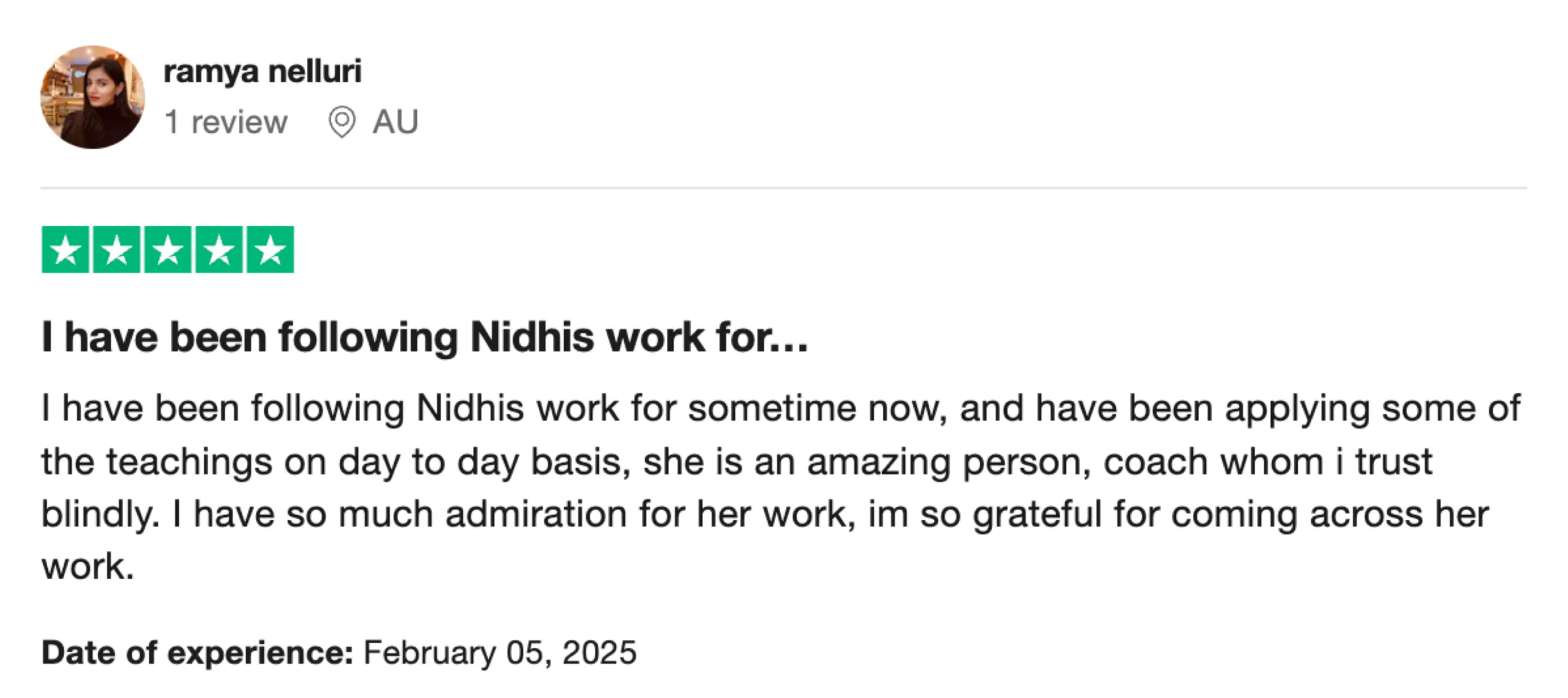
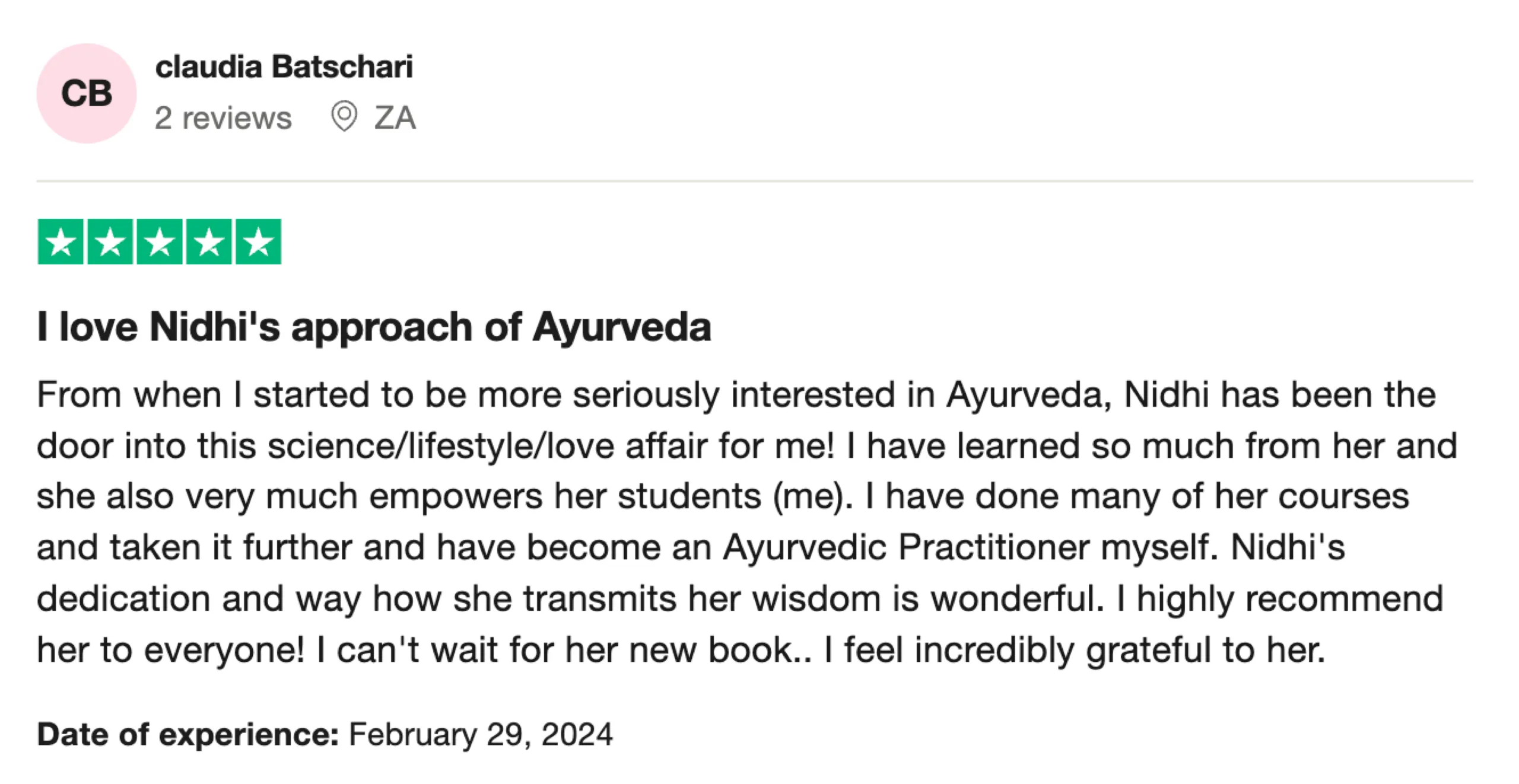
I am a New York City–based Ayurvedic practitioner, bestselling author, and third-generation practitioner raised in a family where Ayurveda was simply how life was lived. My grandfather was an Ayurvedic healer, and his wisdom reached me through the kitchen of our 14-member household in India, long before anyone called it "wellness."
Later, I spent five years in gurukula-style study of the classical Sanskrit texts, taught by faculty from Tilak Maharashtra Vidyapeeth in Pune. I am a NAMA-certified Advanced Ayurvedic Practitioner (CAAP), and I have been in practice for over 15 years.
In this program, you learn to work with Agni — your digestive fire — straight from those original texts.
Some of you come for your own kitchen. Some of you come for your clients. You learn side by side because the question is the same: what should this person eat, and why? Practitioners bring rigor to the room. Personal students keep the work rooted in real life. Each path makes the other stronger.
I built this program because I kept meeting people who had finished an Ayurveda training and still couldn't answer a simple question about a client's breakfast. They had the vocabulary, but not the method.
This is the method.

Features & Collaborations




Nidhi's Ayurvedic Nutrition
Certification Program
Join the Waitlist for 2026
Fill out the form below to join the waitlist for our next cohort, beginning in October 2026 – Once enrollment opens, we’ll reach out with all the details and give you the first opportunity to join.